Is it real?
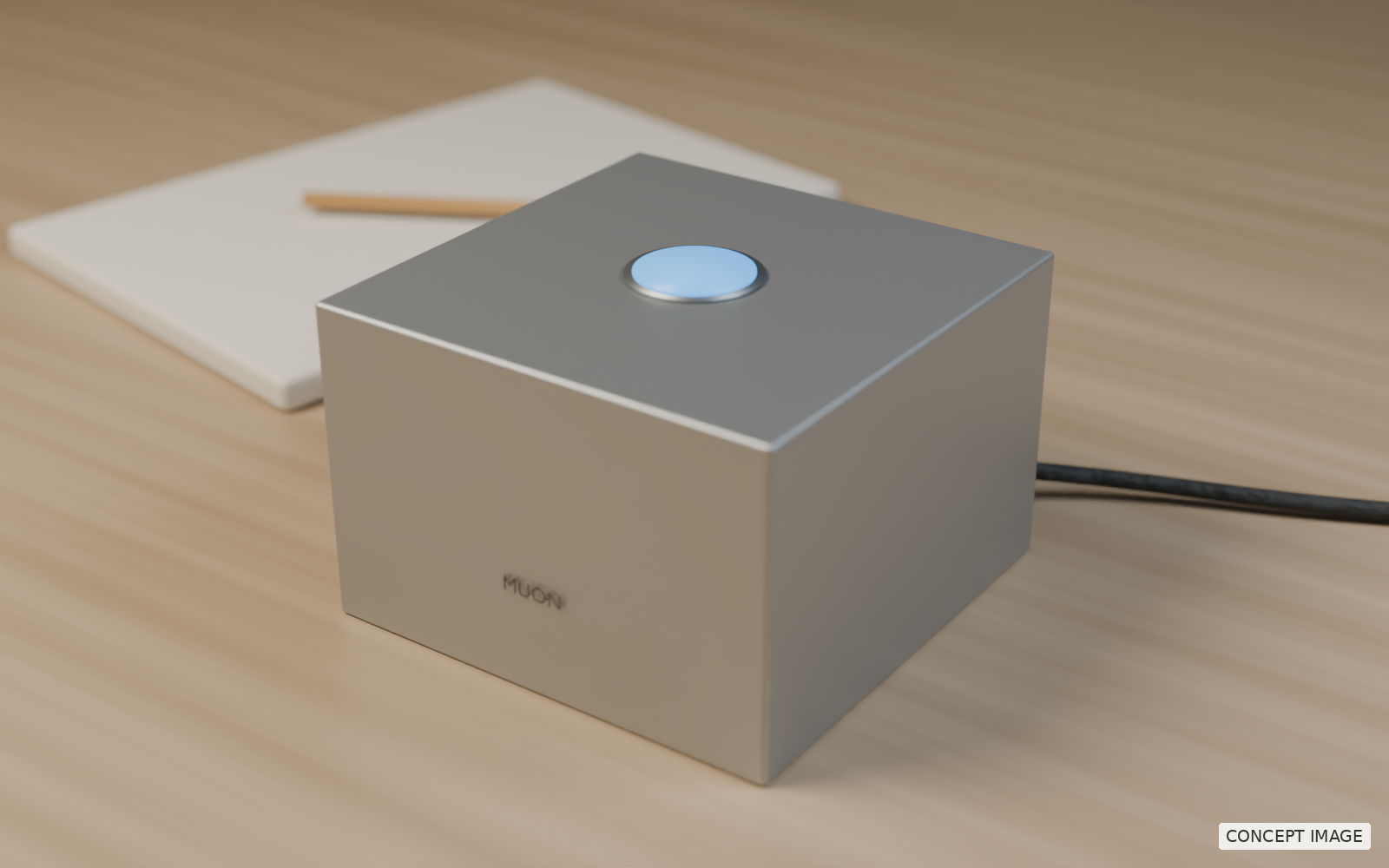
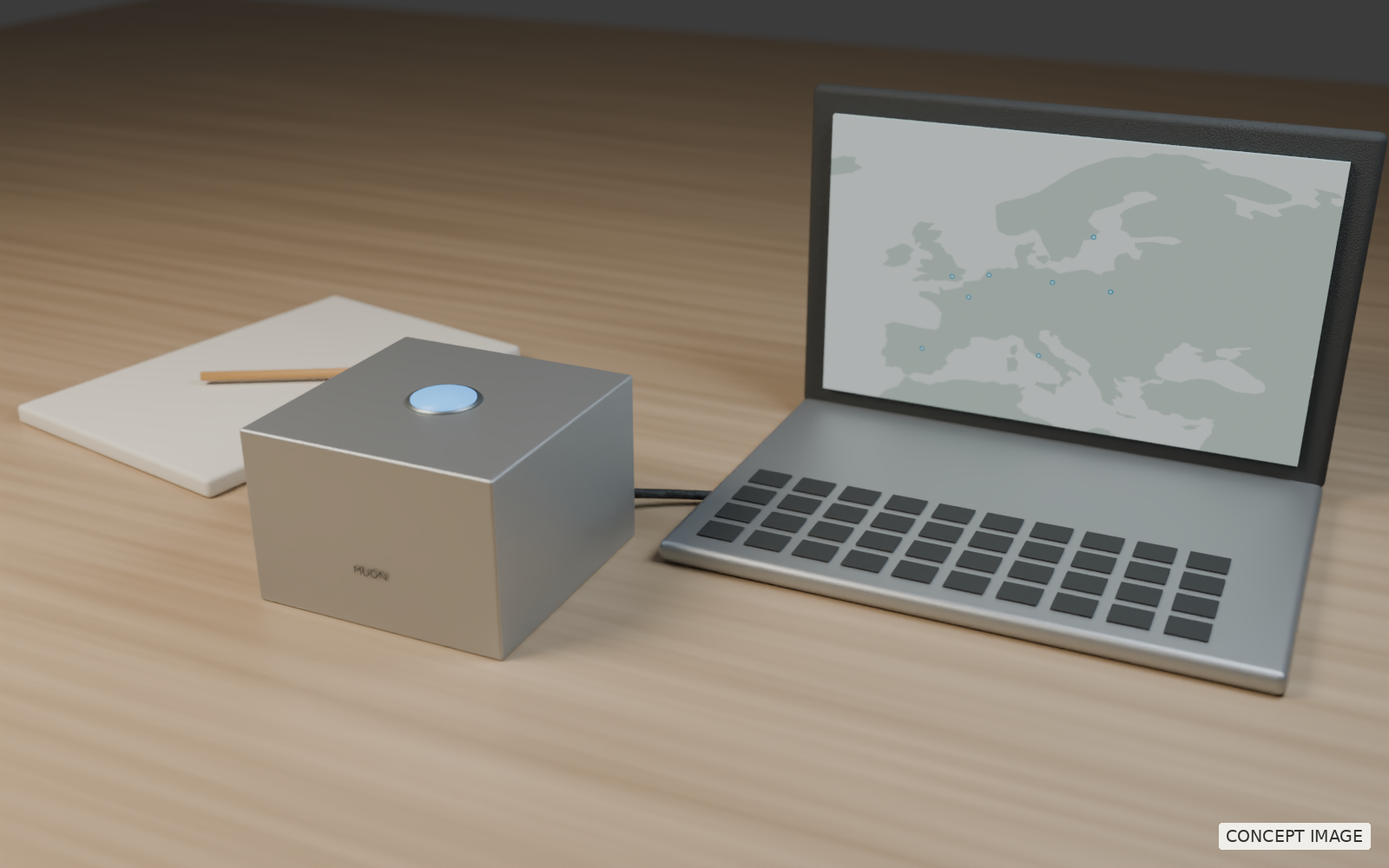
The physics is real and well known: plastic scintillators and silicon light sensors are the standard way to count muons, and university physics departments build small desk detectors on that principle for teaching. This product, however, does not exist yet. The pictures are renders, the case is being designed, and I have not built a working prototype. The €1 reservation is how I find out whether it is worth building.
What if it never ships?
Then you get your euro back, automatically and without asking. If too few people reserve, or the prototype cannot reach the quality I want, or the campaign does not fund, there will be no campaign charge and no product, and every reservation is refunded to the card that paid it. You will hear about it by email either way.
Is it safe? Is it radioactive?
It contains nothing radioactive. It does not emit particles; it only detects the muons that already pass through you, your desk and your house all the time, whether a detector is there or not. The scintillator is a block of ordinary plastic. The electronics run from 5 V USB and raise a small internal voltage of about 30 V for the light sensors, at a tiny current, on a board you cannot reach without unscrewing the case. It will carry the CE marking before it is sold.
How often will it flash, and does it work indoors?
About once every three seconds at sea level, at irregular intervals, because particle arrivals are random. That is the rate expected from two stacked 5 × 5 cm slabs, and I will confirm it on the prototype. It works indoors: muons go through roofs and floors, and a few storeys of concrete only lower the rate a little. In a deep basement it will be noticeably slower, and in the mountains a little faster.
Do I need an app, an account or Wi-Fi?
No. The detector works on its own as soon as it is plugged into any USB-C power source. If you want the count history or the map, you plug it into a computer and open a web page in Chrome or Edge, which talks to it over USB. There is no app to install, no account and no radio inside.
What happens to my data on the map?
Nothing leaves your computer unless you switch sharing on. If you do, the map receives counts per minute and the position you choose, rounded to about ten kilometres, never your exact address. You can stop sharing and delete your detector's history from the map at any time. The map's data will be open for anyone to study.
Why does it cost €299 to €349?
The two light sensors and two scintillator slabs alone cost around €100 at small quantities, the case is machined from solid aluminium rather than moulded, and a batch of 50 carries the full cost of testing and certification spread over very few units. I'll publish the price once the first quotes are in, and reservers get the lowest one.
Is the design open source?
The software that runs the web page and the map will be open source. The electronics are designed for this product, and I will say exactly what is open and under which licence before the campaign. Credit goes to the researchers whose published work on desk muon detectors made this kind of object possible.